Canvas Tents
Buy Canvas Tents Online: Why Choose Cotton Canvas?
When you buy canvas tents online, you’re choosing a shelter that behaves very differently from the thin, coated fabrics used in budget tents. Cotton canvas is a woven natural material, and that gives it qualities that campers and glampers keep coming back for, season after season.
Below you’ll find the main reasons people choose canvas. Each one affects how comfortable your trips feel, how long the tent lasts and how much value you get from it over the years.
Fresh Air and Less Condensation
The weave of cotton canvas lets air pass through slowly. Warm, damp air from your breathing doesn’t collect on the walls, so you wake up to a fresher tent and a ceiling that isn’t dripping on your sleeping bag.
This matters most on longer trips when several people share the same space. With four people in a tent for a few nights, moisture builds up fast, and canvas handles it far better than most coated fabrics.
A Cooler Tent in Summer
Canvas doesn’t heat up the way plastic-based fabrics do. On a sunny afternoon, the inside of a canvas tent stays noticeably more comfortable, and with the door and windows open the air moves freely through the space.
That is why many customers who buy our canvas tents for sale pick them for festivals, beach weekends and hot-weather camping. You get shade and shelter without the stuffy, greenhouse feeling.
Built for Years of Use
Canvas is tough. It copes with repeated pitching, sun exposure and everyday wear better than most lightweight materials, and a damaged panel can usually be patched or restitched rather than the whole tent being thrown away.
Look after it properly and a canvas tent can stay in service for [ten years or more]. Spread across all the trips you’ll take, the higher upfront price often works out as the better value.
Quiet in Rain and Wind
Rain on canvas is a soft, steady patter. Wind doesn’t make the fabric crackle or flap, so the tent stays calm even when the weather is not.
If you like falling asleep to the sound of rain without being kept awake by it, this is one of the most noticeable benefits. Light sleepers and families with small children often mention it first.
A Tent That Looks Good
The natural color, clean lines and cabin-like shapes suit a woodland clearing, a farm field or your own back garden. A canvas tent looks like part of the landscape rather than something dropped onto it.
That’s why canvas tents are so popular for glamping, guest accommodation and outdoor hosting. People notice them, photograph them and ask where you got yours.
Canvas Tents for Sale by Style
Our canvas tents for sale come in three main styles: cottage, bell and large family or event tents. Each one suits a different kind of trip and a different size of group.
Read through the styles below to see which one matches how you camp. If you’re still unsure after that, message us and we’ll help you choose.
Canvas Cottage Tents for Sale
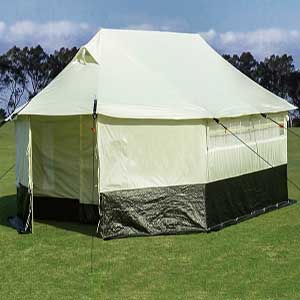
A cottage tent has near-vertical walls and a pitched roof, like a small cabin. The big benefit is usable space. You can put a bed, a bag or a chair right against the wall and still have good standing height across most of the floor.
Cottage tents are also quick to understand and pitch. The straight-sided shape means no wasted corners, and the steep roof sheds rain well. If you want a comfortable base camp without a complicated setup, start here.
Who Canvas Cottage Tents Suit
Cottage tents suit couples, small families and anyone who wants a comfortable base rather than just somewhere to sleep. They fit easily on standard campsite pitches and in most gardens.
They also work well as garden guest rooms, festival shelters and hobby spaces. If you want a tent that does more than one job, the cottage shape is the most flexible.
Our Most Popular Small Size
The 2.5m × 2.5m canvas cottage tent is our best-known compact model. It sleeps two adults comfortably with room for bags, and with two people it pitches in about [15–20] minutes.
It’s a good first canvas tent because it’s easy to handle, easy to store and small enough to fit in most car boots. View the full specs on its product page to check fabric weight, poles and packed size.
Canvas Bell Tents for Sale
A bell tent stands on a single central pole with a round floor plan. The roof rises to a peak in the middle, giving generous headroom and an open, airy feel that suits shared living space.
Bell tents are a favorite for glamping and group camping because the round layout makes a natural gathering spot. They’re also one of the most photogenic tents you can buy, which is a bonus if you host guests.
Who Bell Tents Suit
Bell tents suit families, groups of friends, glamping businesses and anyone who wants a tent that’s a talking point as much as a shelter. They work especially well when several people will spend time inside together.
If you run a campsite or rent out guest stays, a canvas bell tent for sale like ours gives you a good-looking, durable unit that guests enjoy staying in.
Layout Tips for Bell Tents
The walls slope inwards, so the space nearest the edge is lower than the middle. Beds fit best around the outside, while the tall center is ideal for a table, seating or a rug.
Sketch your layout on paper before choosing a size. Measure your bed or camp cots, and leave a walkway so you aren’t climbing over furniture to reach the door.
Large Canvas Tents for Sale
When you need more room, our large canvas tents give you space for multiple beds, a living area or a cooking corner. They’re built for bigger groups and longer stays.
They also work as shelters for markets, garden parties, weddings and community events. If you need a sturdy canvas space that holds a crowd, this is the category to browse.
Planning for a Big Group
Allow around [1.5–2 m²] of floor per adult if you want space for bags and bedding. A tent that technically fits everyone lying side by side will feel cramped for real use.
If a listing says a tent sleeps six, plan it for four or five to keep things comfortable. Extra space is always better than too little, especially if you’ll be inside during bad weather.
How to Choose the Right Canvas Tent to Buy
Choosing from our canvas tents for sale is easier when you answer a few honest questions first. The right tent depends on your group, your pitch and the kind of trips you take.
Work through the points below before you order. It takes a few minutes and can save you from buying a size that doesn’t fit your plans.
How Many People Will Sleep in It?
The sleeping capacity on a product page is usually the maximum, with everyone lying side by side and no gear. Real trips involve bags, bedding, camp beds and a few extras you don’t want left outside.
Be realistic about space. If you’re between two sizes, the larger one is almost always the better choice, because you’ll rarely regret having extra room.
Where Will You Pitch It?
A small cottage tent fits easily on a normal campsite or in a garden. A large bell tent or family tent needs more room and a flat, clear spot with space around it for guy ropes.
If you’re booking a campsite, check the pitch size before you order. If you’re pitching on your own land, walk the area first and look for slopes, roots and low branches.
What Canvas Weight Do You Need?
Canvas weight is measured in grams per square meter (gsm). It tells you how thick and heavy the fabric is, which affects durability, weather performance and how heavy the tent is to carry.
Weight is one of the most useful numbers on a product page. Here’s what the two common ranges mean in practice.
Lighter Canvas (240–300 gsm)
Lighter canvas is easier to handle and pack. It suits fair-weather trips, shorter stays and campers who want a lighter load in the car.
It’s a sensible choice if you camp a few times a year in settled weather and want a canvas tent that’s easy to manage.
Heavier Canvas (320–400 gsm)
Heavier canvas is thicker and more durable. It’s a better fit for frequent use, longer stays and changeable weather, and it tends to hold up better to repeated pitching.
The trade-off is weight and packed size, so make sure you’re comfortable lifting and storing it. For regular campers and glamping hosts, the extra durability is usually worth it.
Check the Treatment
Fabric weight is only part of the picture. Look at whether the canvas is treated for water resistance and mould resistance, as this affects how the tent performs in damp conditions.
Every product page lists the treatment used, so you know what you’re getting. If a detail isn’t listed, ask us before you buy.
Sewn-In Groundsheet or Floorless?
A sewn-in floor keeps out bugs, draughts and damp from the ground, and makes the tent feel more like a proper room. It’s a good option for families, glamping and anyone who wants a clean, sealed interior.
Floorless designs are easier to air out and can be pitched over different surfaces with a separate groundsheet. We state clearly on every listing which type you’re getting.
Weight and Transport
Canvas is a heavy material. A tent in our range can weigh [X–X kg] packed, which is no problem when you drive to the pitch but not suited to carrying on your back.
Check that the packed size fits your car boot, and think about how you’ll lift it. Packed size and weight are shown on each product page.
Waterproof Canvas Tents: What to Expect
Many shoppers searching for canvas tents for sale want to know how well canvas handles rain. The honest answer is very well, as long as you understand how the fabric works.
Canvas behaves differently from plastic-coated shelters, and knowing the basics means no surprises on your first wet night.
How Canvas Keeps Water Out
Cotton fibers swell when they get wet and close up the gaps in the weave. This is what makes canvas weather-resistant, and it’s the reason a good canvas tent can handle steady rain.
It also means the tent stays breathable. Water stays out while damp air still escapes, which is why the interior feels fresher than in a sealed shell.
What Happens the First Time It Rains
If the tent gets soaked on its first pitch, a little seepage along the seams is normal. It settles after the first full wetting as the fibers swell and seal.
Seasoning your tent in the garden before your first trip avoids the surprise. Pitch it, soak it with a hose and let it dry fully.
Treated Canvas
Treated canvas adds extra water and mould resistance. It’s a useful upgrade if you camp often or in damp climates.
Each product page tells you which treatment is used, so you can compare options and choose the level of protection you need.
Where Our Customers Use Canvas Tents
Canvas tents aren’t only for traditional camping. Customers buy them for family trips, guest stays, events and garden spaces.
Here are the most common uses, in case they give you ideas for your own plans.
Family Camping Trips
A roomy canvas tent gives families a dry, comfortable base with space to change clothes, play cards on a rainy afternoon and keep bags out of the way.
Children enjoy the cabin feel, and parents appreciate being able to stand up and move around. It turns bad weather from a problem into part of the trip.
Glamping and Guest Stays
Add a rug, a proper bed and some lighting, and a canvas tent becomes a charming guest room. Small hosts and campsite owners often choose canvas camping tents for sale for exactly this reason.
Canvas looks inviting in listings and photos, and guests enjoy the experience. Durable fabric also means the tent keeps looking good through a busy season.
Festivals and Outdoor Events
Shade, shelter and extra space make canvas a great festival choice. It stays more comfortable in the sun and gives you somewhere to retreat when the weather turns.
Larger tents also work as market stalls, pop-up shops and party shelters. A canvas structure gives your event a warmer, more welcoming look than plain plastic.
Garden Rooms and Hideaways
A cottage-style canvas tent can be a play space for children, a reading corner, a quiet studio or somewhere to relax on a warm evening.
It’s a low-cost way to add usable space to your garden without building work. Take it down in winter or leave it up in a sheltered spot, depending on your climate.
Canvas Tent Care Guide
A little care goes a long way. Follow these steps and your canvas tent will stay in good shape for years.
None of the steps are difficult, but skipping them is the most common reason a canvas tent gets damaged early.
Season the Canvas First
Pitch the tent in your garden and soak it with a hose. The fibers swell and close the weave, so you’re ready for real weather.
Let it dry fully afterwards before packing. This one-time step makes your first trip far more relaxed.
Dry It Fully Before Packing
This is the most important rule. Packing away damp canvas is how mould starts, and mould is hard to remove once it takes hold.
If you have to pack up wet, pitch the tent again as soon as you get home and let it dry completely. Make sure it’s bone dry before folding.
Keep Beds and Bags Off the Walls
Touching the inside of wet canvas can break the seal at that spot and cause a drip. It’s a simple thing to forget in a small tent.
Leave a few centimeters between the walls and anything you want to keep dry. Arrange beds and bags inward from the edges.
Clean Gently
Brush off dry dirt with a soft brush. For marks, use clean water and light scrubbing, working gently so you don’t rough up the fabric.
Avoid detergent, which can strip the waterproofing from the canvas. If you have a stubborn stain, contact us for advice before you try anything stronger.
Storage
Store your tent loosely folded in a cool, dry, ventilated place. Tight, compressed folding for months can weaken the fabric along the creases.
Damp sheds and garages are the enemy of canvas. A spare room, loft or dry cupboard is far better.
Frequently Asked Questions
These are the questions we hear most from people buying a canvas tent. If yours isn’t here, get in touch and we’ll answer it.
Q1. Are canvas tents waterproof?
Canvas is naturally water-resistant. When rain hits it, the cotton fibres swell and close the weave, which stops water coming through.
A little seepage on the first soak is normal and settles quickly. Treated canvas gives extra protection, and seasoning the tent before your first trip helps a lot.
Q2. How long does a canvas tent last?
With proper drying, storage and care, [10 years or more] is realistic. Many owners keep the same tent for a very long time.
Damage is usually repairable, so a small tear doesn’t end the tent’s life. Most early failures come from being stored damp.
Q3. How much do canvas tents cost?
Price depends on size, fabric weight and style. Our canvas tents for sale start from [price], and every product page shows the full price.
Canvas costs more upfront than basic tents, but it lasts longer and holds its value better. Think of it as a long-term purchase.
Q4. Can I use a canvas tent in winter?
Yes, within limits. Canvas holds warmth well and handles wind with confidence, so it’s a good choice for cooler weather.
For cold conditions, choose a tent with a sewn-in groundsheet [and a stove jack, if you offer one]. Always follow safety guidance when using any heat source.
Q5. How long does it take to pitch a canvas tent?
A 2.5m × 2.5m cottage tent takes about [15–20] minutes with two people. Bell tents and larger models take longer.
Allow extra time for your first pitch while you learn the setup. Practising in the garden beforehand makes the first trip smoother.
Q6. Do canvas tents get mouldy?
Only if they’re stored damp. Dry the tent fully before packing and keep it somewhere ventilated.
If you spot mould, brush it off dry and air the tent in sunlight. Prevention is much easier than cure.
Ready to Buy Your Canvas Tent?
Browse our canvas tents for sale above, check the sizes and pick the tent that fits how you camp. Every listing has the details you need to decide with confidence.
If you’d like help first, message us with your group size and trip plans, and we’ll point you in the right direction.
Showing all 6 results
-

Canvas Cottage Tent 2.5m × 2.5m
R5,380.00 -
Canvas Cottage Tent 2.5m × 3m
R4,600.00 -
Canvas Cottage Tent 3m × 3m
R5,380.00 -
Canvas Cottage Tent 3m × 4m
R5,900.00 -
Family Tent 4m × 6.5m
R13,999.00 -
Rhino Tuff Bush Marquee 5m × 10m
R23,750.00